01
Access control
Fingerprint and face readers, RFID cards and electronic locks — stand-alone on one door, or on a controller that carries every door in the building and reports who went through which one, and when.

Protect your people, your assets, and your business from liability. We don’t just mount cameras — we engineer an intelligent surveillance and access control system that lives on your network and gives you a complete record of who went where, and when.
A grainy video or a lost key creates a liability nightmare. We design security systems that provide irrefutable, timestamped evidence. From tracking employee attendance via biometric readers to providing crystal-clear 4K footage of a perimeter breach, our systems protect you legally and operationally.
An alarm, a door, and a camera must describe the same event at the same second. We integrate these four layers into one unified network so your security team is never guessing what happened.
Fingerprint and face readers, RFID cards and electronic locks — stand-alone on one door, or on a controller that carries every door in the building and reports who went through which one, and when.
4K domes and bullets with colour night vision, motion detection and remote viewing through a central network video recorder. Cameras sit on the data network, so the same cable that powers them carries the footage.
Visitor management for a gated estate or a corporate reception: see who is at the barrier, speak to them and release the gate from the desk, with the call and the release recorded.
Intruder detection and fire alarm integration, with the alert path agreed before commissioning — who is told, by what, and what happens at 2 a.m. when nobody is looking at a screen.

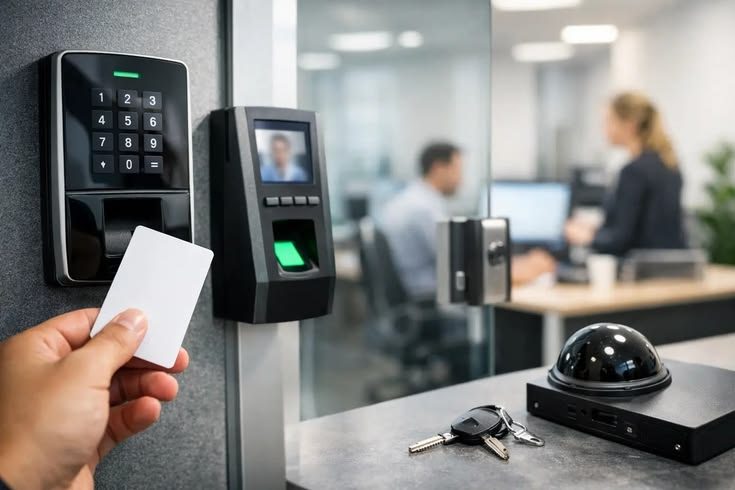
A mechanical key tells you nothing. An electronic door records the card, the person and the time, and can be changed in a minute when someone leaves — without re-cutting a key or collecting a fob from a driver who has already moved on.
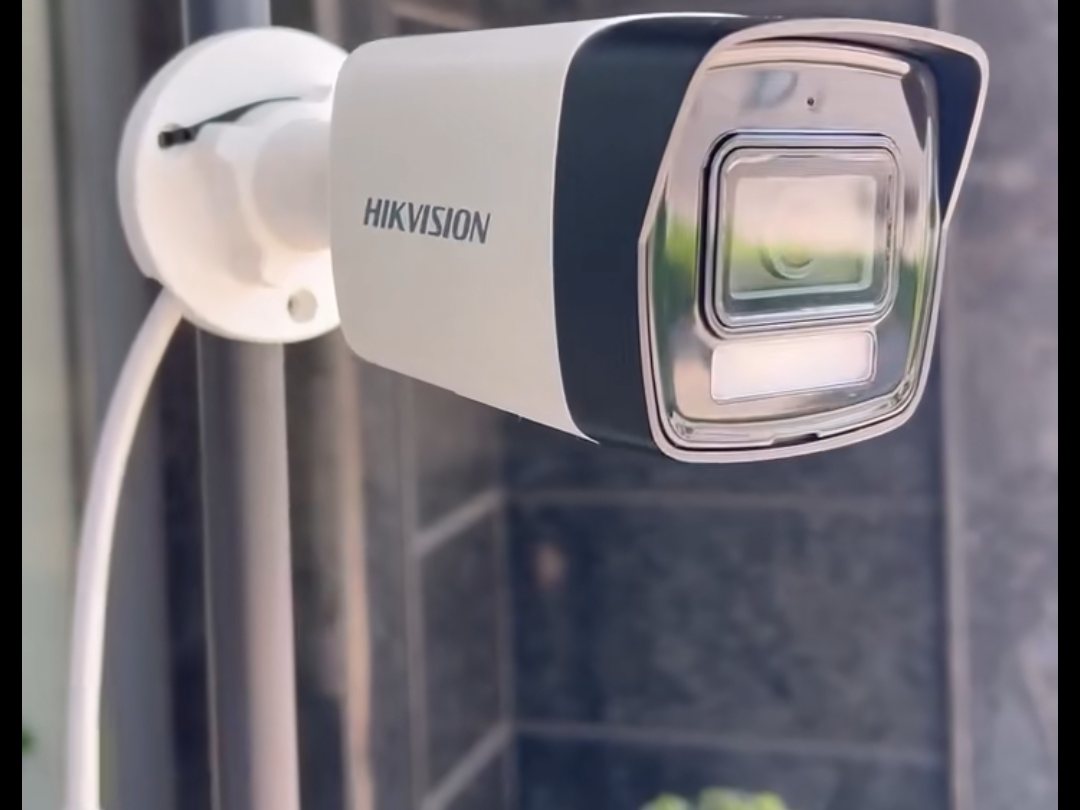

What a site actually pays for is coverage that holds up at night, and a recorder sized for the number of days the footage has to exist. Both are decisions made before the order, not after the first incident.
Doors, gates, blind spots, cable routes and the places a camera would be useless by the time the sun goes down. The plan comes from the walk, not from a brochure.
How many days of footage, at what resolution, and who is allowed to view which camera and export a clip. Written down before anything is fitted.
Cameras and readers on the network, PoE planned per switch, the recorder sized to the retention figure, and every door and camera tested from the desk it will actually be watched from.
Credentials in your name, a drawing of what sits where, and a short session with the people who will use it — including how to export a clip when someone asks for one.
Cameras and readers are addressed, switched and powered like any other device, on their own VLAN with their own rules. That is why a camera can be reached from Accra and a branch in Kumasi without a public port being opened anywhere.
Footage is kept for a stated number of days at a stated resolution, and the disk is sized for that number before the order is placed. The most expensive way to buy surveillance is to find out in month two that the recorder holds nine days.
Your security system should do more than just record video. The same access card that opens the server room can automatically log employee attendance, restrict access to the finance department, and trigger an alert if a door is forced open.

Surveillance and access control, integrated into the network rather than bolted on beside it.

The smaller site where the budget is tight and the network is already Omada: cameras and a recorder in the same controller.
Those two numbers decide most of the design. Tell us the site type and roughly how many entrances and cameras you have in mind, and we will say what can share the existing network and what has to be re-cabled.
Or call +233 54 925 3380 — the same team answers.