Waterproofing: the work you never see and always pay for
Waterproofing is the cheapest element of a wet room to install and by a wide margin the most expensive to correct. Nearly every failure we are called to inspect traces back to a detail, not a product.
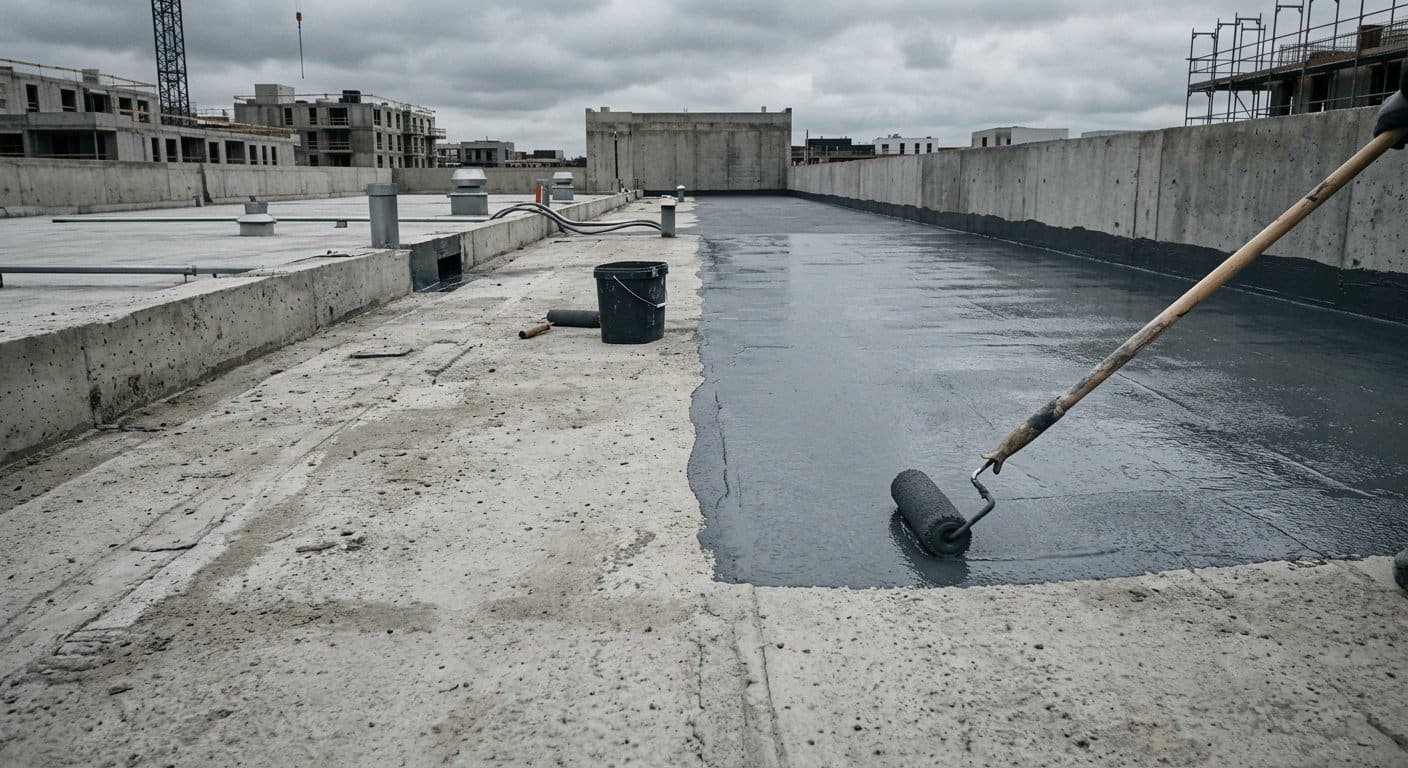
We are asked to inspect water damage fairly regularly. In the overwhelming majority of cases the membrane itself is intact and performing exactly as intended. The water has gone around it — through a junction, a penetration or an upstand that was never properly formed.
This is worth stating plainly, because it changes what you should scrutinise in a quotation. Waterproofing failures are detailing failures. Buying a better product does not fix poor detailing, and good detailing with a mid-range product will outlast the building.
Where failures actually happen
- Wall-to-floor junctions — the single most common failure point. The membrane must be continuous around the corner, not two flat applications meeting at an edge.
- Pipe penetrations — every pipe through a waterproofed surface needs a collar or sleeve. A bead of sealant around a pipe is not waterproofing; it is a maintenance item with a short life.
- Door thresholds — the membrane must turn up and extend beyond the wet area. Water travels along the floor screed further than most people expect.
- Upstand height — too low is the most frequent specification error. In a shower area the membrane should extend well above the highest point water can reach, including spray.
- Drain flanges — the membrane bonds to the drain body itself. Terminating it near the drain leaves an open path straight into the slab.
The sequence is not negotiable
Waterproofing sits between the screed and the finish, and every stage has a curing period that exists for a reason. The pressure to compress this sequence is constant on any programme that is running late, and it is where most avoidable failures originate.
The membrane needs to cure fully before it is tested. It needs to be flood-tested before tiling — filling the area and leaving it standing for 24 hours is the only way to confirm the work before it is buried. And it must be protected during subsequent trades, because a membrane is a thin layer and a dropped tool will go through it.
Tiling over an untested membrane saves a day. Discovering the failure afterwards costs the tiling, the screed, the ceiling below and the redecoration.
Choosing a system
Two broad approaches cover most residential and commercial work. Liquid-applied membranes are painted or rolled on, form a seamless film with no joints to fail, and handle complex shapes and multiple penetrations well — they are the practical default for bathrooms. Sheet membranes are laid rather than applied, offer very consistent thickness because they are factory-made, and suit large simple areas such as podium decks and flat roofs.
What matters more than the choice is that the whole system comes from one manufacturer — membrane, primer, tape, collars and corner pieces together. Mixing brands across a system is how compatibility problems arise, and it voids the warranty precisely when you would want to rely on it.

What “supply and install” actually includes
The phrase is used as if everyone already agrees what it covers. They do not. The surprises are almost never the product — they are access, making-good, storage, waste, and who owns the substrate when something is not square.

Choosing finishes for Accra humidity and harmattan dust
Ghanaian interiors fail in two seasons for two different reasons: moisture that never quite leaves, and dust that arrives all at once. The finish that looks right on a sample board is not always the one that still looks right in March.
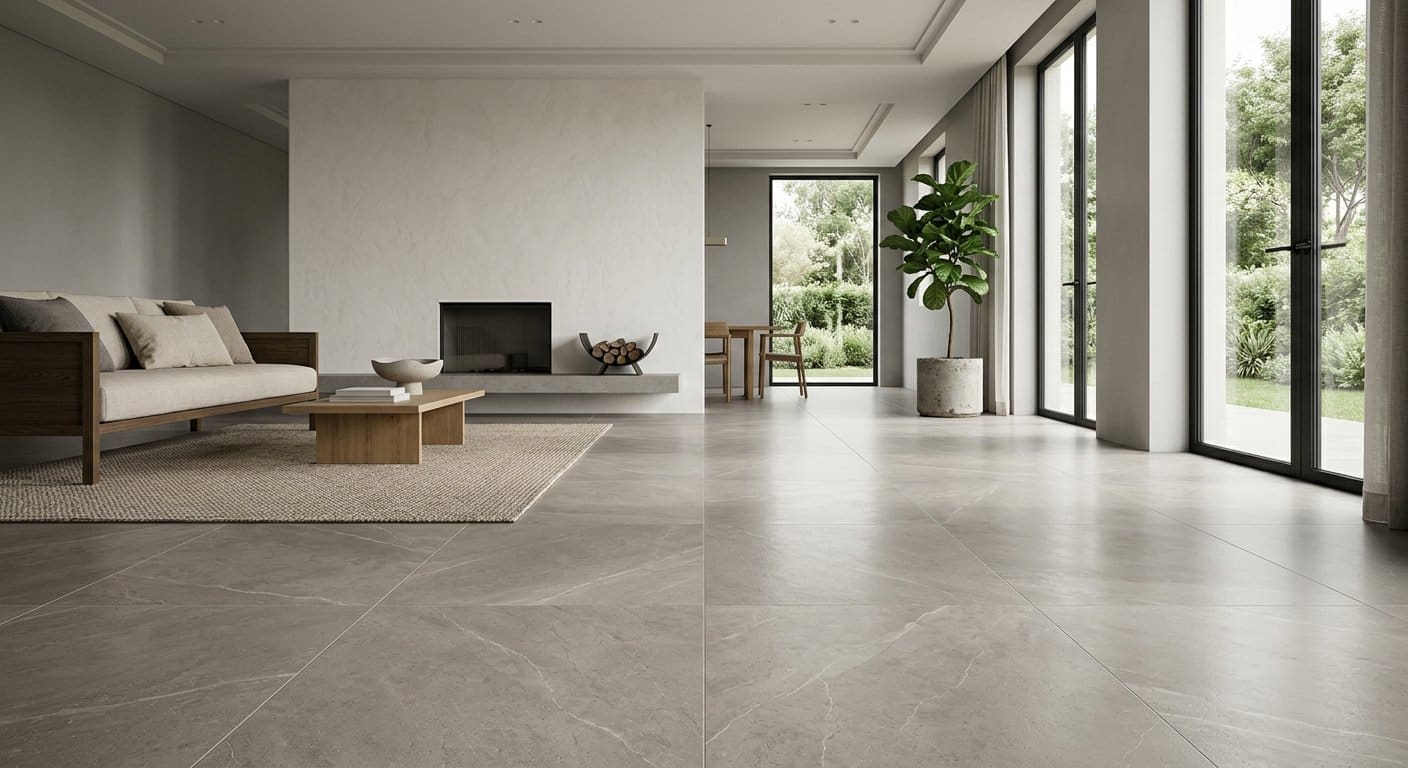
Porcelain, LVP or engineered wood: choosing a floor that lasts
A floor is chosen from a sample held in the hand and judged years later underfoot. The properties that decide how it ages — substrate, moisture and traffic — are the ones a sample cannot show you.
Planning something along these lines?
Send drawings, a room schedule, or photographs of the space. We will tell you what it needs and what it costs.
Get a consultation