Cameras that help when something actually happens
Resolution is the specification everyone compares and the one that least often decides whether footage turns out to be useful. Placement, light and retention matter more, and all three are settled before anything is bought.
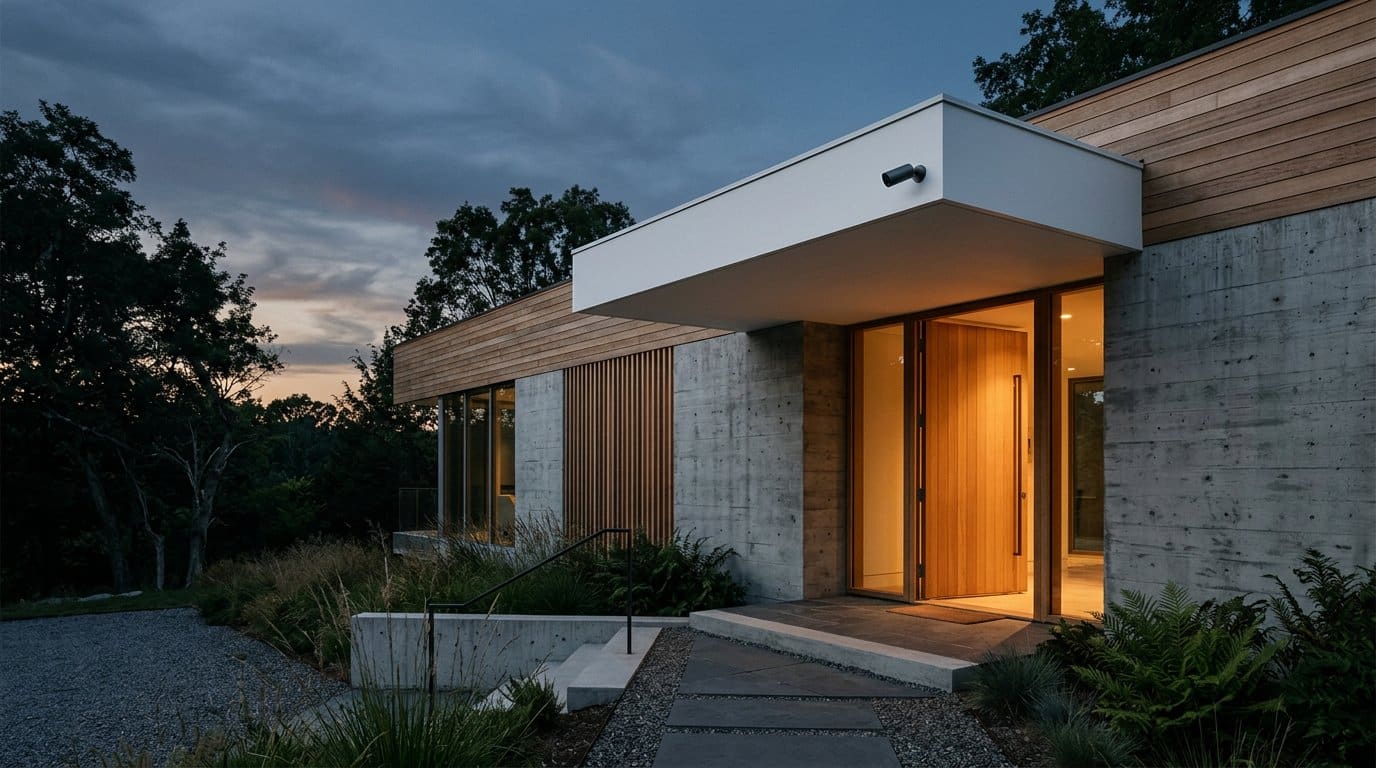
A camera system is only ever judged at one moment: when you need footage of something that has already happened. Everything else is anticipation. That single fact should drive the specification, and it rarely does.
The failure is almost never resolution
When recorded footage turns out to be useless, the cause is usually geometry or light rather than pixels. A camera mounted too high looks down on the tops of heads. A camera pointed toward a bright gate records silhouettes against the sky. A wide view that covers an entire compound gives every face too few pixels to identify.
- Mount at roughly two and a half to three metres. High enough to be out of reach, low enough to capture faces rather than scalps.
- Never point a camera into the direction of strongest light. A subject between the lens and a bright sky records as an outline.
- Cover choke points — gates, doorways, stair heads, driveways — rather than open expanses. Everyone must pass through a choke point; not everyone crosses the middle of a yard.
- Give at least one camera the single job of identification at the main entrance, framed tightly at face height. Let the wider cameras handle context.
- Watch infrared washout. At night a subject close to the lens can be overexposed to a white blur while the background stays visible.
Retention is a storage decision, made before purchase
Incidents are often discovered days later — a delivery that never arrived, a theft noticed at the end of a week. If the recorder only holds three days, the footage is already gone. Retention is a function of camera count, resolution, frame rate and drive size, and it should be specified as a target from the outset: how many days back must we be able to look?
Higher resolution consumes storage quickly. This is the real trade-off behind the resolution question — not image quality against cost, but image quality against how far back the record reaches.
Local recording, cloud, or both
Local recording keeps footage on site, has no subscription and does not depend on your internet connection. Its weakness is obvious: the recorder can be taken or damaged along with everything else. Cloud recording survives that, but continuously uploading several streams places a sustained load on an upstream connection, which is the constraint that most often decides the question in practice.
The sensible middle position is local recording for the full retention period, with event clips or a single entrance camera mirrored off site. You keep the depth of a local system and the survivability of a remote one.
Power and cabling decide reliability
Wireless cameras are quick to install and are the first thing to fail when the network is congested or the signal is marginal. Where a cable can be run, run one. Power over Ethernet carries data and power in a single cable and keeps every camera on one controlled supply.
That supply must include the outage. A camera system that stops when the grid does is unavailable during exactly the conditions in which people most often need it. The recorder, the switch and the cameras together draw modestly, and a small dedicated battery covers them for hours.
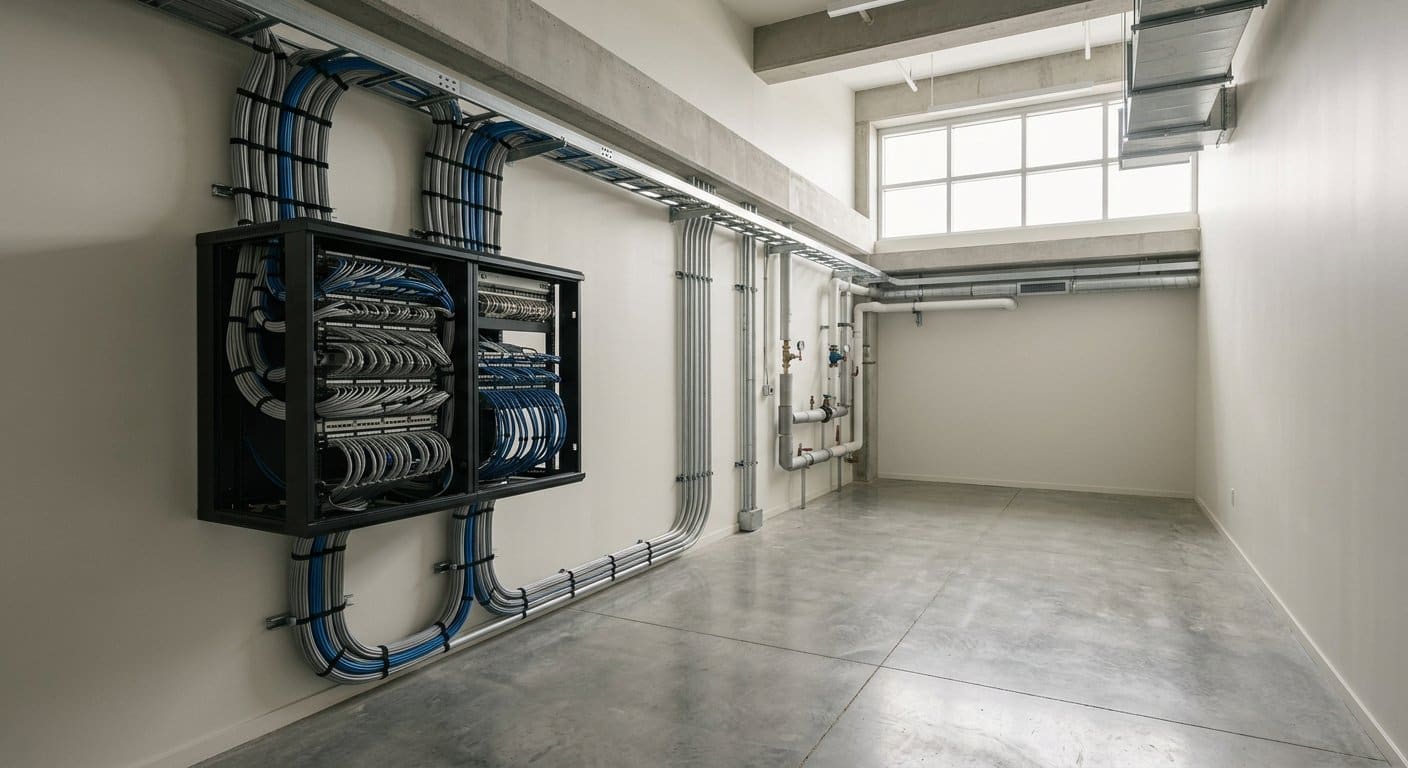
Wired or retrofit: choosing a smart home approach
The decision is made by your building programme, not by the technology. If the walls are open you have one set of options; if they are closed you have another, and both can produce a good result.
What “supply and install” actually includes
The phrase is used as if everyone already agrees what it covers. They do not. The surprises are almost never the product — they are access, making-good, storage, waste, and who owns the substrate when something is not square.
Choosing finishes for Accra humidity and harmattan dust
Ghanaian interiors fail in two seasons for two different reasons: moisture that never quite leaves, and dust that arrives all at once. The finish that looks right on a sample board is not always the one that still looks right in March.
Planning something along these lines?
Send drawings, a room schedule, or photographs of the space. We will tell you what it needs and what it costs.
Get a consultation